
My Approach to Therapy
Therapy works best when you feel genuinely understood — not just heard, but truly seen for who you are, where you come from, and what you carry. That belief is at the heart of everything I do. Finding the right therapist can be challenging, so I want to be transparent about what working with me will look like.
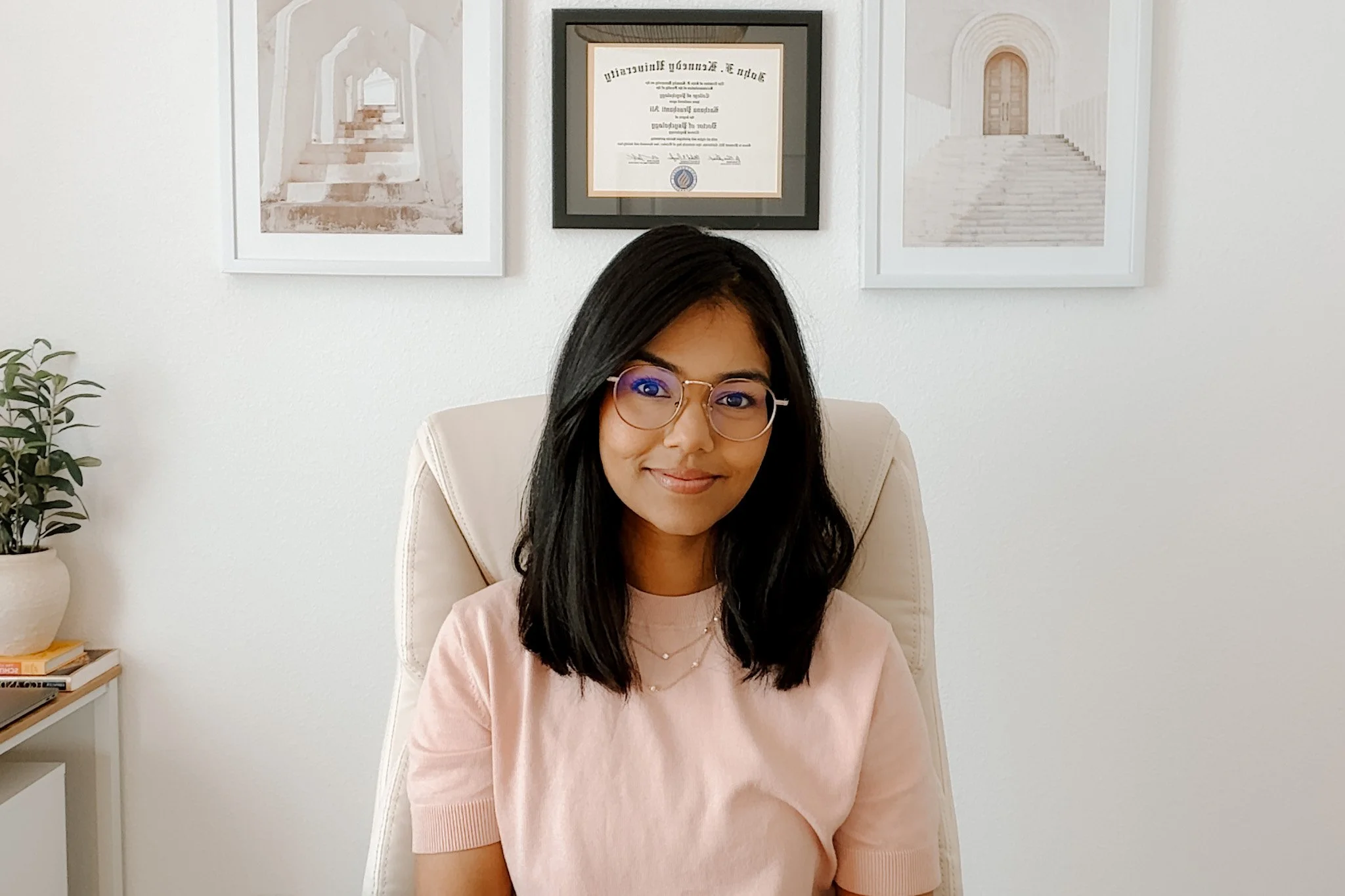
I'm Dr. Rachana Ali, a licensed clinical psychologist (PSY35068) based in the Bay Area, offering telehealth therapy to clients throughout California. My approach brings together evidence-based techniques and deep cultural attunement — so that the work we do together honors both the science of healing and the fullness of your lived experience.
Hello, and welcome to my virtual therapy space!
A Relationship-First Foundation
Before any technique or framework, I believe in the power of the therapeutic relationship. Research consistently shows that the quality of the connection between therapist and client is one of the strongest predictors of meaningful change. I take that seriously.
My work is grounded in a person-centered approach — which means I follow your lead. You set the pace. I bring curiosity, warmth, and a deep respect for your autonomy. There is no agenda imposed on you, no rigid formula to fit yourself into. Sessions are a space where you can be exactly who you are.
Evidence-Based Methods I Draw From
I use an integrative approach, meaning I pull from multiple therapeutic frameworks and adapt them to your specific needs rather than applying a one-size-fits-all method. The modalities I work with most often include:
Attachment Therapy — to explore how your earliest bonds with caregivers shaped your sense of safety, trust, and connection in relationships today. Understanding your attachment patterns can be profoundly clarifying — especially when you find yourself repeating dynamics you don't fully understand.
Acceptance and Commitment Therapy (ACT)— to help you stop fighting your inner experience and instead build a life guided by your values. ACT focuses on developing psychological flexibility: learning to hold difficult thoughts and feelings without being controlled by them, and taking meaningful action even in the presence of discomfort.
Psychodynamic Therapy — to uncover the deeper, often unconscious roots of the patterns and struggles that keep showing up in your life. This approach explores how past experiences, early relationships, and long-held beliefs about yourself and the world continue to influence how you feel and behave today.
These three approaches work together beautifully — attachment work helps you understand where your patterns came from, psychodynamic therapy helps you make meaning of them, and ACT gives you practical tools to move forward with intention. I weave between them fluidly, guided by what feels most useful for you at any given moment.
Culturally Sensitive & Affirming Care
Many of my clients have felt invisible in therapy before — their cultural background treated as an afterthought, or their very real struggles around family expectation, identity, and belonging met with confusion or generic advice.
I bring a culturally informed lens to every session. I understand the particular weight carried by South Asian clients, immigrants, and first-generation Americans — the tension between honoring your roots and building a life that feels authentically yours, the guilt that comes with setting boundaries, the pressure to achieve without pause, the experience of navigating two worlds at once.
You will never have to explain or justify your cultural context to me. We can speak the same language — even when that language doesn't have a direct translation.
What You Can Expect in Our Work Together
From the very first session, my goal is for you to feel safe enough to be honest — about what's hard, what you want, and what you're afraid to say out loud. The work we do together will be thoughtful, collaborative, and paced by you.
In our sessions, you can expect:
A warm, non-judgmental space where all parts of your experience are welcome
Honest, direct feedback delivered with care — I won't just reflect back what you say
Practical tools you can use outside of sessions, not just insight inside them
Flexibility as your needs change — I adjust the approach as we learn together
Cultural attunement woven throughout, not added as an afterthought
Who I Work With
I work with teens (14+), young adults, and adults navigating a wide range of concerns, including anxiety, self-esteem, relationship challenges, life transitions, maternal mental health, and identity. I have a particular passion for working with South Asian women, children of immigrants, and first-generation Americans — though my practice warmly welcomes clients from all backgrounds.
All sessions are held via secure video telehealth, available to anyone located in California. I am a private-pay provider and can provide superbills for out-of-network reimbursement.
Frequently Asked Questions
What does 'person-centered therapy' mean?
Person-centered therapy means that you — not a diagnosis or a treatment protocol — are the focus of our work. I follow your priorities, your pace, and your definition of what healing looks like. My role is to provide a safe, supportive environment where your own capacity for growth can emerge.
What is Acceptance and Commitment Therapy (ACT)?
ACT is an evidence-based approach that focuses on building psychological flexibility — the ability to be present with difficult thoughts and feelings without letting them dictate your choices. Rather than trying to eliminate discomfort, ACT helps you clarify what truly matters to you and take action in alignment with your values, even when life is hard. It's particularly effective for anxiety, perfectionism, and chronic stress.
What is Attachment Therapy?
Attachment therapy explores how the bonds you formed early in life — with parents, caregivers, or family — continue to shape how you relate to others today. Our attachment patterns influence how we handle closeness and distance, conflict, trust, and vulnerability in relationships. Understanding yours can be a turning point — especially when you notice patterns in your relationships that feel familiar but hard to change.
What is Psychodynamic Therapy?
Psychodynamic therapy helps you explore the deeper, sometimes unconscious forces driving your emotions and behaviors. It looks at how early experiences, family dynamics, and long-held beliefs about yourself have shaped who you are today — and how bringing those patterns into awareness creates space for real, lasting change. It's especially meaningful for people who feel like they understand their problems intellectually but can't seem to shift them.
What does 'culturally sensitive' therapy actually mean in practice?
It means I understand that your cultural background, family system, and community are not separate from your mental health — they are part of it. I won't ask you to adopt a Western, individualistic framework for healing if it doesn't fit your life. Instead, we work within the context of your real world, values, and relationships.
Do I need a specific diagnosis to work with you?
No. Many of my clients don't have a formal diagnosis and are simply navigating difficult life experiences, stress, or a desire for personal growth. You don't need a label to deserve support.
Ready to Experience a Different Kind of Therapy?
If what you've read here resonates — if you've been looking for a therapist who brings both clinical skill and genuine cultural understanding — I'd love to connect. I offer a free 15-minute consultation so you can ask questions, share what's on your mind, and decide if working together feels right.